Avast! Thar be spoilers ahead!

Tuesday, July 20, 2010

The Dispossed: An Ambiguous Utopia


I have not yet finished this book but it is living up what I have come to expect from Le Guin-a complete world governed by different social structures, deep characters, and the painful feeling that I am missing out on something whenever I am forced to put the book down.

The book is structured both sequentially and simultanouesly according to concepts in phsyics explored by Shevek, the protagonist. This concept is not so difficult to me because it is at the heart of the Jewish calendar, or more correctly the heart of the conflict between the Jewish and the secular calendars. On the face of things, the calendars are only different in that the former is a lunar calendar while the latter is a solar calendar. The both have seven day week cycles, they are marked by (semi)lunar events called months, each annual orbit of the sun begins a new calendar year, and the months are sprinkled with secular and/or religious holidays. However, if you live with both, they begin to take on different meanings. The Jewish calendar becomes one of tradition, of repeating cycles. The Sabbath grounds the week and returns one constantly to peace, to the celebration of life, and to God. The secular calendar marks the forward movement of time through life, the daily grind. The cycle and the progression are part of each other.

Oh travel through the heavens! This is not what I meant to write about but I have wandered into time and physics. I will give it a go.

Shevek tries to explain time like a book. Everything is in the book already but we must move through it from one end to the other. We are only readers of a small portion and we are only able to understand our portion if we move from beinning to end. If you have read Slaughterhouse Five, you will be familiar with this understanding of time as this is how Tralfalmadorians view time, except that they can see the end as easily as the beginning and move fluidly through it. This naturally becomes determinist, lackign free will. Shevek tries (maybe he eventually succeeds) in reconciling his theories of physics and time with free will. I would struggle to put the two together, too, but I am not worried about free will. It doesn't seem worth worrying about since, unless you are Kilgore Trout, you don't get to change whatever the status quo is.

The two worlds, Anarres and Urras, revolve around each other, referring to one another as moons of their earth/world. So, too, do their civilizations and governments pull and repel each other while travelling through their orbits. I haven't developed this thought enough to comment on its relationship to the theories of physics and time that are central to the novel.

Inception


I am finding it difficult to write anything without erasing it. This is a great movie, a smart movie, a beautiful movie.

My dreams are intense, detailed, full of sensation. Often, I struggle to recall if some event, some conversation is in fact real or something I merely dreamt. I dream in color, I dream with temperature, I dream with taste and smell and touch. The place between dreaming and waking is unnerving for me. I feel as if I am moving between two realities. Which ever one I am in feels like the real one but I find it unappealing to shut myself off from my dream worlds.

I used to imagine that when we dream in this world, we wake up in another world, one of many worlds in which we live. We lead full lives in these other worlds but when we wake to each new world, the others fall away and we can grasp at only snatches of the others. Please, don't question my sanity. I understand REM sleep. I don't believe these things, I just like to imagine.

If any of this sounds like you, go see Inception. It exists in a world where these boundaries are very much blurred, where one can enter into shared dreams, where the projections of people in our dreams carry on even when they are not on stage. And isn't it fun to wonder if we are not just some one's projection, unaware that our entire lives take place inside one person's sleep, moving around and fulfilling ourselves just in case a brown haired, brown eyed woman of 25 is needed to ride a bus a few seats away from the dreamer. It is terrifying, too, because nothing is truly stable in a dream. At any moment the sun could cease to be.

In Inception, other people are allowed to enter a person's dream and manipulate their subconscious. For some, this is a flight of fancy, escapism. Some use it for purposes of theft of information. The difficulty in this movie is the implanting of an idea. One person is a dreamer but for everyone else the dream is "lucid", they are aware that they are in a dream world. In fact, they create the world for the dreamer.

Isn't that alone a beautiful impossibility. The plot obviously leaps to the cynical possibilities but can you imagine designing the world for a loved one to dream in. A world without nightmares. But then again, that is a world with a caged subconscious, which is more terrifying than someone fishing around my suppressed thoughts just to find out what my bank pin is.

Christopher Nolan, who not only directed but wrote the movie as well, is gifted with a frequency of lucid dreaming that I lack. Since he has experience in the manipulation of his own dreams, he took this idea even further than I had hoped. There is an amazing fight scene which takes place in both suspended and shifting gravity. There is also a scene in which an architect folds and manipulates the world physically.

If you want a movie you've never seen, a story you haven't already heard, I cannot recommend Inception enough.

Friday, July 16, 2010

Rendezvous with Rama


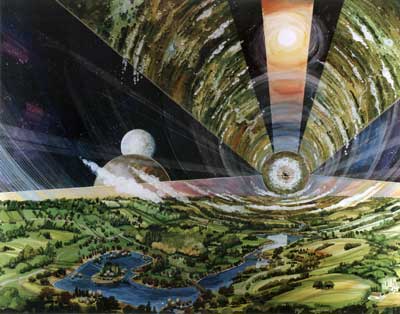
Against expectations, the aliens do not appear. Rather, Rama is a passing world, briefly coming to life in a shocking display of evolution and animation only to recycle itself as it sling-shots around the sun in disregard for the animal life it has confounded in its brief journey through the solar system. Any and all things understood about Rama must come from human reason and imagination. There is no host population to translate and explain.

Rama, a world in an enormous pill. It is a medicinal dose of discovery. Stories of conquistadors, missions, colonization, etc, that make us all slightly ill with guilt - or at least they make me feel that way. Why? Certainly not because I would conduct negotiations at the end of a gun. I have the privilege of living in 2010 in a fairly egalitarian society (at least politically on paper) and in the great wide world known as the internet*. The exotic has become psychologically domesticated and I have little fear of run ins with the unknown (and even less opportunity to have such run ins). Rendezvous with Rama offers a fairy-tale type of exploration. Hostility is denied, fears are faced, and extraordinary astronauts repress their biological reactions in the name of diplomacy. It is with great sadness and relief that these star sailors flee without having met one of the true Ramans. There is no culture clash, no war culture coming across a peace culture (you can decide for yourself which culture either of the teams would be on).

I did not draw a connection to the Age of Exploration on my own. The spaceship is named the Endeavor after one of Captain Cook's ships. The captain often ponders Cook and compares his successes and failure to Cook, not only as an explorer and captain but also as a human and a husband.

There are indeed some forms of life, the biots, biological robots. They are simple, utilitarian, undeniably organic but not alive as we understand the word. In high school, on the first day of biology, we were asked to define life. What an extraordinary complicated task. What lept to my mind was the inevitability of death, which is no more easy to explain in a satisfying way. I could say the inability to move, permanent lack of consciousness, etc. But these are merely negations of life. So what does alive mean? We agreed that reproduction, conversion of material into energy (metabolism), and growth were necessary. Sufficient? Not quite. A robot-building robot might fit that description. Self-sustaining seemed important, although like many other elements is suggests that certain humans in certain conditions are not truly alive. Cells! now there is an element I can get behind. Some organization of a cell or cells-microscopic bacterium, enormous ostrich egg, and the beautiful gestalt of multi-celled organisms. Dr. Kephart kindly added some of the remaining elements which had been either too uncertain or too unclear in my mind (and probably others'): evolution, the possibility to change from generation to generation; stimulus response, which can be part of growth but also exhibited in movement. So, there you have it, life itself. Solitary, poor, nasty, brutish and short.

How do the biots rank? Reproduction-check. The biots had available blueprints for their makeup and were either spawned or built as Rama neared Sol. Metabolism- null. Biots lacked a means of ingesting food or a digestive system. I don't think the shifting of electrons through a power chord count as metabolism since the energy is already converted. Growth - null. Self-sufficient - null. Cells-check. Their skeletal system was built in a honeycomb pattern of cells, which reminded me a great deal of that awesome cat with the million-dollar-man style hind legs. But the biot's cells were organic. Evolution-difficult to tell but I would imagine null. Stimulus response, check. I found this an inconclusive and dissatisfying analysis. But at least these biots are only science fiction (at the moment) so the ethical ramifications of their possible life can be delayed, probably through my lifetime and yours.

These biots, while possessing mobility and some intelligence, ignore the astronauts. Since the Ramans fail to appear, the humans have only Rama itself and themselves to explore. While this may seem dull and uneventful, I can feel a lingering tidal tug that will cause me to return again and again to some detail from the story. Each character is well developed and believable. Those in charge have attributes we wish to ascribe to ourselves, even humility. And because I can relate, I find myself questioning what I would think, how I would act, what I would do. Rama is much like the early Myst series computer games. They provided a world to explore without the threat of inhabitants.

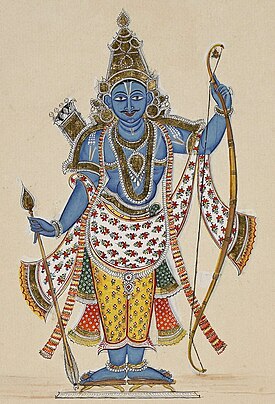
In case you are wondering, and like any good human you are always wondering, Rama is one of Vishnu's avatars. He is known as the Lord of Self Control and the Lord of Virtue. His life is a struggle to maintain perfect dharma, by doing what is appropriate and right even in difficult trials.

*Spellcheck insists that the internet must be capitalized but I disagree.

Friday, July 2, 2010

A. I. Artificial Intelligence


I have given much time and thought to this movie, probably more than it deserves. It is a blatant remake of the Pinocchio story. There is a conflict between humans and mechas, android humans capable of intelligent thought, emotions and physical sensation. David is the first child mecha, given to a family with an injured son who is kept in suspended animation. The child is cured, comes home, starts inevitable trouble, and David is released in the wild to fend for himself. A mecha prostitute, Gigolo Joe, helps David escape danger and find the blue fairy, which is just a statue. David meets his maker, is upset that he is not unique, and attempts to commit suicide. He spends hundreds of years trapped in a submersible craft until rescued by advanced mechas. Humans no longer exist. Mechas are incredibly advanced, communicate through touch, and look like anorexic aliens. They give David a day that he can spend with his recreated mother. At the end, he goes to sleep, or shuts himself down.

The move was started by Kubrick and completed by Spielberg, an unexpected progeny if ever there was one. Spielberg has claimed that some of the darker elements are his and I rather believe that because they were not altogether horrifying and dark. Unregistered, damaged and obsolete mechas are collected for entertainment. Humans who resent the mechas eclipse of humanity create a circus in which mechas are tortured. The so called Flesh Fair looked very much like a monster truck rally. It had all the elements of the grotesque and gaudiness for which America is well known. Except, when you step back, it is hardly scary or disturbing. The machines are incapable of pleading for their lives and capable of shutting off their physical sensations.

The ending was trite and grating. James Berardinelli, a film critic, referred to it as "force-fed catharsis." I can think of not better description. The super-robots can clone a human for a single day. What? They can read minds, are obsessed with the extinct humans, too. It just doesn't work. Supposedly this was Kubrik's idea but I feel it is a cheap conclusion, unlike Kubrik's other dark films.

If I were to remake this movie, I would make Gigalo Joe the focus. He overcomes some of this programming, he sticks by David, helps him, risk himself all in the hope that David is capable of bridging the gap between robot to humanity.

I suppose my biggest problem was how annoying and pathetic David seemed to be. He is obsessed with his mother in a nearly Oedipal way. He is whiny, incapable of socializing with other kids, incapable of doing anything really. He is almost like an infant in an 11 year olds body. His creators toy with him, his mother abandons him. It just amounts to so much nonsense.

Saturday, June 26, 2010

My Creation, Is It Real?

We can rebuild him! We have the technology. The Six Million Dollar Cat!

Oscar is the world's first bionic cat. After an accident that resulted in the severing of his two hind legs, Oscar's prospects were not good. Most quadripeds can get along with only 3 legs, but losing the support for the entire back half of his body is too much for a cat to live without. Veterinarian Noel Fitzpatrick created revolutionary implants featuring a honeycomb pattern with which Oscar's skin could bond. Oscar's new implants have a reduced risk of infection because that bond between flesh and metal is complete. He is still being monitored and getting used to his new legs but his recovery so far has been astounding.


Sunday, May 2, 2010

Theme: Slavery

Slavery creeps in to science fiction in a few ways.

Humans Enslaved by Aliens
This is the simplest, most pedestrian form of slavery featured in science fiction. Humans are captured and forced to do manual labor, often to build weapons for space warfare.

Wage Slavery
Excuse me if that sounds a little like communist paranoia. By wage slavery I do not mean that humans are held captive by the need to work long hours to earn money to obtain material possession until they die. Instead, I am referring to enforced tributes to an alien species. It is possible for alien overlords (even human overlords) to enslave a population without forcing them into labor at the end of a whip. Instead, a species may simply show itself to be at a military advantage and demand wealth or resources. A different and weaker form of this would be demanding wealth and resources in an unfair exchange for technology, information or aid with the understanding of prolonged indebtedness.

Slavery of Mind
Dystopia novels like 1984 and Brave New World present societies in which thoughts are monitored, controlled, even programmed. In 1984, we are introduced to the idea of thoughtcrime or crimethink. This goes beyond freedom of speech, which we can control, to freedom of thought, which to a large part we cannot control. The mind is the refuge of the sufferer, where one can express what one cannot act. The Thought Police enforce ideology to its deepest roots. When we are not free to think, we are hardly alive at all.

Sleep Learning is the means of mind control in Brave New World. Thoughts, preferences, prejudices are implanted in infancy. But the process begins even in the embryonic stage. The fetuses of the lower castes are limited in brain function. Other elements are manipulated according to the future job of the fetus (for example, those who will work in space must be comfortable working upside down). Deltas, Gammas and Epsilons are bred en masse, identical to siblings of enormous groups. Each class is given a preference for their own class, their own fashion (castes are color coded), ambitions, etc. Each person feels that they have free will but nothing in their personality exists except for their programming - unless you are fortunate enough to be a savage.

Replacement
Common in science fiction is the replacement of one's mind or will with that of an alien species. Invasion of the Body Snatchers features aliens which assume the appearance of individual humans while behaving with a hive mentality. The Puppet Masters is the tale of slug-like aliens that can control animal bodies only while attached to them, often neglecting to maintain the health of the body and changing bodies whenever one dies. In these stories, humans become the unwitting vehicles of their own destruction. They suffer death without their body dieing with their mind. Instead, their bodies are exploited.

Non-Human Slavery
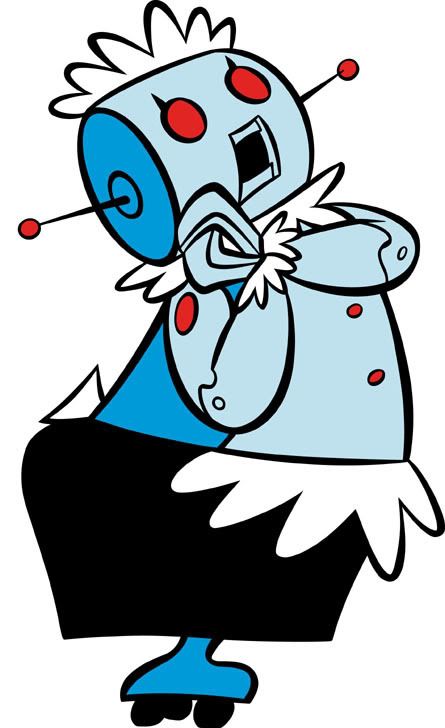
Many works toy with the idea of intelligent, huminoid robots. These robots are functional, created to serve humanity. Their purposes range from sex workers, soldiers, domestics, mechanics, surrogate parents, surrogate children, economic regulators, and advance scouts. The trouble rises when these robots are developed to (or beginning to develop on their own) emote, think independently and feel pain. There are no morals for a mechanical device, but ethics become complicated when robots begin to resemble humans. Something which thinks, feels, hurts, fears cannot be bought and sold, forced into danger, forced into labor without crossing ethical boundaries.

Thursday, April 29, 2010

Don't Need Pets

"For example, can I make even you understand how I know, beyond all question, why it is that the Malacandrians don't keep pets and, in general, don't feel about their 'lower animals' as we do about ours? Naturally it is the sort of thing they themselves could never have told me. One just sees why when one sees the three species together. Each of them is to the others both what a man is to us and what an animal is to us. They can talk to each other, they can co-operate, they have the same ethics; to that extent a sorn and a hross meet like two men. But then each finds the other different, funny, attractive as an animal is attractive. Some instinct starved in us, which we try to soothe by treating irrational creatures almost as if they were rational, is really satisfied in Malacandra. They don't need pets."
-C. S. Lewis from Out of the Silent Planet

I had intended to write about this passage for a course I am taking on animals and religion but after a meeting with one of my professors, I have been side-tracked toward something altogether more practical.

When I wrote much earlier that Earth Abides has been my first sci-fi book that was both true and misleading. It would have been better to say that it was the first book I read while aware of the whole weight of science fiction. But years before that I was having a C. S. Lewis kick having discovered the Chronicles of Narnia and then his religious texts and then his other works. So it was natural that I should come across his strange sci-fi trilogy. I have never quite made heads of tails of it. At the time, I read it in light of his religious works. And since I could not have been more than 11, I confess much of that was merely stored away to be reflected upon later. I have always had rather great faith that eventually I will understand. So I read something over my head and wait.

If I read the book now I would see it through the lens of science fiction and also through Lewis's relationship with Tolkein. I still not sure what to make of it. So I store it away and wait for understanding.

This passage has stuck with me. We need pets. The fulfill in us some deep, cosmic loneliness. We are the only beings like us, capable of complete language - at the very least we absolutely deny every other species the right to be in our class. And, because we deny them, we make it true. We teach apes sign language but refuse to try to learn theirs, to communicate to them as they would to each other.

We like to pretend that humans are a more recent occurrence than they are. On a terrestrial time scale, especially on a universal time scale, humanity is just the tiniest of dots at one end of the scale. But humans, the homo sapiens kind, have been kicking around this planet for almost 200,000 years. During that time, we spend a few thousand years sharing the earth with Neanderthals, and quite a few other cousins from the homo branch of the ape tree. Consider the "ancient world" that you know - temple, pyramids, the great wall of China. The time between the construction of those buildings and today is shorter than the time humans spent sharing this planet with other beings that were pretty darn close to ourselves. Since we shared certain amazing anatomy (their hyoid bone is just like ours) they were able to make the curious array of sounds we call talking.

It probably was not very exciting or fulfilling for either species to have the other around. Life was hard and people didn't have time to waste on existential loneliness - or fulfillment for that matter. Only very recently have we had the luxury of sitting around bemoaning that we have only our own species to wear thin with our constant prattle.

I have been considering writing a parallel universe style story to explore this little fixation of mine. In the other universe, one or more now-extinct species from the homo genus has survived to the modern day. Europe did not happen, at least not the way it is now. Humanity survived in Africa. I have not figured out the new world just yet. It would be rather difficult not to draw from Clan of the Cave Bear or the Thursday Next series.

Monday, April 26, 2010

A Word About Genre: Post-Apocalyptic Sci-Fi

The post-apocalyptic genre details the destruction of civilization or the planet, the end of life on earth, and/or the struggles of the human remnant to survive and recreate civilization. The cause of the destruction may be disease, invasion, nuclear holocaust, or a mundane disaster, such as the melting of the poles or dimming of the sun's power. This genre has ancient roots, present in Babylonion and Israelite myths. The threat of the end of times and millenialism has cycled through humanity constantly over our history.

Disease
The disease may be naturally occurring but is most often a manufactured weapon in biological warfare that has been spread by accident. A desperate race may ensue to contain and treat the diseased. The survivors may have natural immunity but frequently have acquired immunity from some government connection, possibly this connection is to the government which unleashed the disease. The survivors rebuild the population while fighting the disease and a second outbreak. Some survivors may interpret the disease as a religious punishment that spared only the just or faithful.

Invasion
Alien invasion may either decimate the population or destroy the habitability of the Earth. Survivors may fight back in war or attempt to escape the Earth in search of a new home planet. Invasion may also come from a supernatural source, such as zombies, or mutated humans who seek to supplant human culture, I am Legend. The Day of the Triffids is similar except that the invaders are an intelligent and lethal plant life that had been genetically engineered for economic purposes.

Nuclear holocaust was a popular element during the cold war era and the paranoia caused by the space race. This destruction is the result of either direct attack in a war or of misfired weapons. The survivors are understandably hostile and distrusting. Crude clans or governments form according to rule by fist. The threat of nuclear fallout or mutation haunts characters.

Classic Examples:
Earth Abides
Dr. Strangelove
Planet of the Apes
A Canticle for Leibowitz
The Book of Eli
The Road

Related Genres:
Utopia/Dystopia

Thursday, April 22, 2010

A Word About Genre: Utopia/Dystopia

Utopia comes from a combination of two Greek words: οὐ is "not" and τόπος is "place". It was first used in Sr Thomas More's book of the same name to describe hypothetical ideal societie, often based upon Plato's ideal from The Republic (which I would only recommend if you want a study in fascism).

Dystopia describes the utopia gone wrong, usually in the form of a controlled state - actually quite like Plato's Republic. Or imagine what has become of Cuba - lack of freedoms, threat of violence/imprisonment/loss of income and nationwide poverty. To survive, many assume conformity is utopia/dystopia societies and individuals are stigmatized. Only the top eschalons exhibit individuality and freedom of thought.

Often these societies feature artificial or contrived religions that reinforce the state power. These religions or cultures focus on one's responsibility to the society over themselves and their families. The family unit is often disbanded and a threat to state loyalty.

The state often directly controls or manipulates the economy by deciding what should be produced and how much. In Brave New World, this is created by a control on population numbers and their desires. They are encouraged to value consumerism, to replace instead of repair, to constantly desire. In other works, such as in Asimov's short stories, computers control the world economy. In Kurt Vonnegut's Player Piano, this perfect control over the economy leads to disatisfaction as the populace feels absurdly purposeless denied the ability to work.

Many of these works are set in the future after a world collapse which necessitated the creation of a planned, authoritarian state. Since these stories are set in the future, the control of the society is often enabled by advances in technology.

The hero may come from any social class but typically comes from the extremes in society, either the low/working class or the upper/power class. The hero is often a member and leader of a revolt movement, s/he will perhaps even sacrifice himself for this movement, or humanity itself.

Classic Examples:
Brave New World
Nineteen Eighty-Four
Soylent Green

Sunday, April 18, 2010

Theme: Aliens


Aliens are almost synonymous with sci-fi . . . well, aliens and robots. Descriptions of aliens range wide: green creatures with enormous black eyes, bulbous heads and amphibious skin; insect like animals with claws, mandibles and wings; humanoid species, some even identical to terrestrial humans; fuzzy teddy bears; plungers; an intelligent shade of blue; etc. Some are benevolent such as Le Guinn's Hainish. Others are openly hostile as in War of the Worlds.

In these aliens, we are forced to determine what makes us human. First contact with aliens is often met with fear, hostility and xenophobia. Anthropology, culture and language become both barriers and bridges. The direction of first contact can go either way, a visitor to Earth or a terrestrial visitor to another planet. Visitors to Earth tend to force humans to examine themselves while terrestrial visitors are often oblique studies by presenting cultures which vary greatly from our own.

A third possibility is that neither of the two species is human. In the Hainish cycle, the universe is inhabited by a variety of species which evolved from humans to fit their environment. Their physical appearance, culture, history, sex and gender roles, sexual relationships, etc, may vary both from one another and from our own.

The other side of 'alien' is 'familiar.' We judge others by how they deviate from our status quo and by how they challenge our sense of identity.

An alien life form can cause this disruption without any communication between us and them (or those other ones). Alien life has a privilege that non-human terrestrial life does not - the assumption of sentience and of possible communication.

Latent within this theme are old tropes about exploration, the exotic, orientalism and conquest. There is the ever present threat of exploitation. In the Twilight Zone episodes "People Are Alike All Over", the protagonist finds himself an exhibit in a zoo. The title refers to the aliens who have imprisoned him and the recognition that people enjoy the chance to not only study the exotic but also to tame it, to render it innocuous, and to subjugate it. In science fiction, we continually reinact our past sins when one culture meets another.