Avast! Thar be spoilers ahead!

Friday, July 30, 2010

Ender's Game

Ender is a young child (ages 6-12 through the story) who was bred with the expectation that he would save the world from an alien species called the buggers, more properly known as the formics. The formics are an intelligent, insect race. The humans and formics have clashed twice before. Once in hand to hand combat and again when the humans repelled an invading force. Ender struggles terribly as his teachers intentionally turn the other students against him to isolate him. They also push him harder than any other student, testing his limits and ability to command under stress. Meanwhile, his siblings, Peter and Valentine manipulate politics on earth through aliases online. Ender attempts to throw his final exam by making the unethical decision to wipe out the entire race of formics. However, his exam was not a simulation, as he had been told, but actual battles and skirmishes, his commands carried out by real pilots, many of whom died in order to follow his tactics. Ender is haunted by the number of lives he has taken. However, Valentine offers him a chance at redemption by convincing him to govern one of the first human colonies. There, he discovers an unhatched queen and a message left to him by the dead race. He publishes this message under the pen name "Speaker for the Dead" and carries the egg from planet to planet in hopes of hatching her and bringing the formics back from extinction.

This simple plot is the foundation of a complex study of humanity. Ender is the third born in his family, which is an embarrassment to his parents since population is strictly controlled and a third child is a symbol of pettiness and lack of patriotism. However, Ender's birth was ordered by the military. Peter, the eldest, had originally been the hope of the military but is sadistic and sociopath tendencies frightened them. Valentine was also promising but she had too much of what Peter lacked, empathy.

Ender was somewhere in the middle. Peter resents his brother because Ender's very existence is an enormous sign the Peter was inadequate. He often hurts and terrifies his brother. Peter is not the only one. Ender is bullied at school on Earth and during his military training. Ender, fearing that he will be continually bullied, pushes any physical assault to the limit anticipating that his enemy will never want to fight him again. Two of his attackers die as a result of his retaliation. His teachers and manipulators try to keep him ignorant of this but Ender eventually realizes what he has done. Ender sees his empathy as part of his darker side. He knows his enemy inside and out. When he attacks them, he knows them so well that he loves them they way they loves themselves. But it is that knowledge that allows him to beat them, that love that leads him to kill them.

The formics feel the same about humanity. They manipulate one of his games to reach out to Ender and understand him. They enter his dreams, communicating with him and learning about him and his species. When he arrives on one of their colony planets to govern the human pilgrims, he discovers an artificial landscape that had been shaped in his dreams and nightmares. It is there that he finds the queen's egg and learns completely about his enemies.

Ender does not have a chance to enjoy or experience childhood. His life is made of artificial and real challenges. He constantly struggles with the rest of humanity and with himself. His lessons are harsh as are his reactions. He is not able to trust anyone, even Valetine is used to manipulate him.

After Ender leaves, Peter struggles to destroy his own inner demons. He feels that his sadistic tendencies are wrong but he is driven to them and enjoys the suffering he causes. He convinces Valentine to help him channel his energy and help save humanity. Together the orchestrate political strife on Earth which errupts into a short war. At the end of the war, Peter is able to control humanity. While Peter is tempered into a politician, Valentine struggles to retain her identity as she is drawn to power and manipulation. Despite being children, their parents are nearly inconsequential. For all three children, adults cannot be trusted or relied upon. Their difficulties are faced as mature individuals. None of these children are given the possibility of childhood, they become wise and aged before their time.

Children playing war games, saving the world and the human race, it is difficult not to draw comparisons between this book and the very real and very tragic Children's Crusade. Those medieval children believed that in their very innocence lay their success. Since the crusades were wars of religions, the children who marched off to battle believed that their faith and purity would enable God to fully protect them and lead them to victory. Of course, that is not at all what happened. In Ender's Game, the children's innocence and purity are methodically destroyed, their trust violated, their faith in adults used against them. As soon as Ender discovers the motive behind the games, the rules change. His attempts to circumvent his manipulators only play into their hands, making him complicit and guilty even as he is incapable of escaping his fate and unaware of the consequences of his actions.

It is also easy to see this book as a critique of certain education systems, which are goal driven and do not prepare students for life (or peace). Actually, I doubt at all that Card had this in mind but I do. All of the children in the military academies realize that they can let their studies slip because the game is all that matters to their teachers. At the end of the war against the formics, none of those students will have skills relevant to a world without the constant threat of invasion. Ender sardonically notes that, due to his training and excellence in military tactics and murder, no one thinks he is capable of maintaining peace and order.

Most reviewers ignore the fact that the formics were not actually an invading force when Ender kills them. The formics were unaware that the humans were an intelligent species, treating them as one would treat a wild animal that attacked. The so called second invasion was an attempt to colonize Earth without hostile intentions. However, they were attacked and their queen destroyed. The main complication was communication. The fornics communicated telepathically, shared all information and knowledge automatically. They were incapable of speech and ignorant of language. And of course humans are incapable of telepathy. The feared third invasion never was. It was a preemptive strike, which means that the formics were defending themselves, their queen, their species. And yet, they held no hostility to mankind, no hatred to Ender. Like Ender, they learned to love their enemy. A rather Christian sentiment, powerful because it was complete love as humans can never truly feel toward their attackers. Unless you are the Dalai Lama.

Thursday, July 29, 2010

Blog Title

Ugh! I just found out that the title of my blog bears a striking resemblance to a a romance, sci-fi novel. It might be good for all I know but I am disappointed that it looks like I am referring to the book rather than the 80's Thomas Dulby song and music video.

All my tubes and wires
And careful notes
And antiquated notions

Reflections

A little over a year ago, I began what turned into my year of science fiction. I was, and remain, an amateur in the field. While I have read dozens of novels, watched several movies, explored the genres and themes, I still feel I am a novice, still the Janie-come-lately. There are so many stories, so many classics I have yet to explore. At least I can look forward to never reaching the end of something I enjoy so greatly.

What have I learned? What insights have I gained?

First, that science fiction is about humanity. That is the core of the genre. No matter what the story or where the focus, we read and write science fiction to explore the essence of humanity. Science fiction permits the removal of all the dressings of life. We are all that remains. We imagine who we would be if the context were changed, how far we can push the limits until we lose our identity. The things we take for granted, the elements that are considered inherent to our being are removed and altered.

The books, the movies, the tv shows that I like the least, maybe even hate, are the ones that fail to consider and question humanity, to engage in the ambiguities of life. They represent humans in the most superficial way. Remember that Star Trek crew with the emotional intelligence of adolescents? Do their antics reflect how you behave and think? These twerps are not the high point of human maturity and intelligence, fit to explore the universe's numerous intelligent species and establish positive relationships. It is just a frat party in space.

Second, science fiction is about possibility, what we can make possible, what may be possible if the we can change the rules and laws of reality.

Third, science fiction is a modern form of mythmaking. We create the extraordinary, the ubelieveable. We call the supernatural alien or evolution or progress. The protagonists are extraordinary heroes of strength, cunning, compassion, cruelty, intelligence, leadership. We make them in the image of our greatest desires and fears.

The genre influences and is influenced by our understanding of science and its role in our lives. Exploration into what can be known and invention shape the world of science fiction. But so too does science fiction influence our relationship to science. We have invented what was inspired by fiction. In turn, science fiction has supported our scientific achievements and endeavors, it has inspired to take our minds further than what is physically capable, to reach out to the great unknowns.

Tuesday, July 27, 2010

Planet of Exile


Werel is a planet with a very long orbit around it's sun. In comparison with Earth, one year on Werel is approximately the same number of days as 60 Earth years. The seasons are likewise elongated and a person may live his or her entire life without seeing the same season twice. Similarly, its moon takes 400 days to complete its cycle of phases. As a result, age is kept by moonphases rather than solar years.

A small colony of aliens, sent from the Hainish League of All Worlds to establish contact with the indigenous species. However, this group loses contact with the rest of the league, becoming exiled on Werel. Initially, there are wars and conflicts with the natives. The aliens, called Alterrans, establish small cities. The novel focuses on one city, perhaps the only surviving city of Alterrans. Despite past conflicts, the Alterrans live in relative isolation from the indigenous inhabitants.

The other grouped, because there are always at least two factions if the Hainish are involved, are natives who struggle through their lives in a primitive, semi-nomadic society. These people form family units and larger clans. The head of the family is the head of each household, having several wives and numerous offspring. A separate group of "barbarians" are completely nomadic, travelling far north in the summer and south again in the winter. Though this migration often includes some marauding and pillaging, there is a greater threat this year as the barbarians have all banded together with the intent of invading all of the winter cities of the semi-nomads.

The semi-nomads and the Alterrans agree to band together to fight off the coming invasion but a love affair between its members causes humiliation to one side and physical assault on the other. The remnants of the semi-nomads seek sanctuary in the Alterran city after their own homes are destroyed. The Alterran city comes under attack. It is during this attack that an important discovery is made.

For several generations, the Alterrans had decreasing offspring due to miscarriages and early deaths. The cause was unknown but many suspected that the planet was rejecting them as a species as happens occasionally with organ receivers. However, the injured during the many battles quickly become infected. Initially the alterran doctors are baffled by the symptoms. The original group, over 10 Weral years ago, suffered no illnesses or infections because the planet had not evolved any that would affect their alien bodies. During the ten years, the alterrans had adapted to Weral and Weral's life to the alterrans. The bacterial infections on the alterrans suggested that perhaps now they could interbreed with the indigenous population, which had not previously been the case.

The ability to interbreed is one of the more confounding definitions of "species". You might think you know what a species is but it is difficult to truly define one species from another because evolution just does not work along clear cut lines, on one side you are a giraffe and the other you are a race horse. The alterrans and werals came from the same species but were separated for thousands of years by thousands of light years. Neither group was certain of the humanity of the other, but they were forced to come together by circumstances and biology.

Monday, July 26, 2010

Star Trek: The Next Generation - Episode: The Enemy

I recorded this episode last week but only got around to watching it today. Geordi is stranded on a planet in an intense storm when he, Warf and Riker land to investigate a destroyed Romulan ship. They locate one badly injured Romulan but lose Georgi in the process. Geordi goes on to encounter another Romulan who takes him prisoner. They have a cliche, yet still touching, tete a tete that leads each to rescue the other despite their distrust and distate for the other.

Warf and the other Romulan have a less successful engagement. When Warf discovers the injured, barely conscious Romulan, the Romulan attempts to strangle Warf, stopped only by Warf's pragmatic punch. In sick bay, the Romulan deteriorates quickly due to damage from the planet's magnetic fields which has affected his ribsomes (caused by the Hollywood magic of filling in plot gaps). Only Warf has compatible ribosomes that the Romulan body will accept as a transplant.

Now, if you don't watch Star Trek you might need a little back story. Warf hates Romulans. The Klingons and Romulans have a tortured past including intrigue, conspiracies, and war. Warf has even more reason to hate the Romulans than the average Klingon since his parents were killed in a Romulan attack. Naturally, Worf declines to aid the Romulan. No surprise there. Dr. Crusher tells Worf that without his ribosomes, the Romulan will die. Worf does not relent. She tries again by forcing him to face the dieing Romulan, which backfires when said Romulan declares that he would rather die than have his body polluted by the Klingon. Finally, Captain Piccard practically begs Worf to save the Romulan, not because saving the one man is right but because refusing to save him would jeopardize the Federation and give the Romulans a motive to attack. Piccard can not bring himself to order Worf to comply and shortly after the Romulan dies.

And this moved me. It would be easy for the writers to make Worf the bigger man, the hero who overcomes prejudice to save the life of an enemy but they do not. Instead, Worf does the wrong thing, he lets his hurt and his anger rule him and determine the fate of the Romulan. Worf asserts his non-humanity, his nature as a Klingon through this refusal. He refused our standard of morals, which (rightly) outrages us.

Sunday, July 25, 2010

Rocannon's World


Le Guin's first novel found its place among the Hainish Cycle, the second book according to plot chronology. As with all Le Guin's novels in this cycle, the catalyst is an alien travelling to another world as part of a fact-finding mission.

The planet, later named after Rocannon, has three sentient species. One group which is very short and has split into two groups. Think Tolkein's dwarves and hobbits essentially. One group lives underground, is darker and hairier, where they pursue technology and wealth. They are weapon smiths. The other are light and happy folk who live in meadows and laugh a great deal. Both groups maintain an ability to speak through telepathy. There are also men, superficially divided by race into lords and servants, at least on the northern continent. There are fewer distinctions in the southern continents. Finally, there are also winged people, tall, slim and pale. They are more or less vampires with black wings who survive by sucking the blood out of other mammals. There may be one more species who live solitary lives in caves. Little is known about them.

The prologue follows a young woman, indigenous to the planet, who seeks to reclaim her family's heirloom, a golden necklace with a saphire gem, in order to bring honor and wealth to her husband. To do so, she travels to her childhood home, eventually travelling through the underground caves of the darker little people and their pre-industrial society. To retrieve her necklace, she must travel on the longest night of her life, not realizing that she will travel so quickly that time will pass much slower for her than for the people on her planet. When she returns with the heirloom, she finds her husband dead and her daughter now a grown woman.

Obviously, this reeks of Rip Van Wrinkle. I think this is to set you in the mindset of older stories, myths and legends. The plot proper follows the story of Rocannon, who becomes the stuff of legends. His story is much like Dune, in that he repeatedly finds himself fulfilling a legend, of which he was ignorant. After his ship is destroyed, he journeys accross the known world from the north to the south continent, facing danger and mythical beasts only hinted at by myths. Through his journey and his travails, he gains insight into the culture and history of the planet which had so long alluded him. He also feels his identity change to match the legend.

His goal is a small fleet of enemy ships. Aboard these, he anticipates finding an ansible, a device that will allow him to communicate anywhere in the universe instantly. With the proper coordinates, of course. To infiltrate their base, he must gain a gift from the Ancient Ones, the fourth species of unknown heritage. However, the Ancient One demands a sacrifice from Rocannon, the most important thing to him. He confesses that he does not know what the thing is but he will give it. His sacrifice ends up his friend Mogien, one of the Lords who had befriended Rocannon and aided his journey. In return, Rocannon gains the ability to hear the thoughts of his enemies. Though useful, listening to their thoughts is a great risk because their minds will sense his presence.

This gift is spread to members of the Hainish League, though without the same terrible price.

Saturday, July 24, 2010

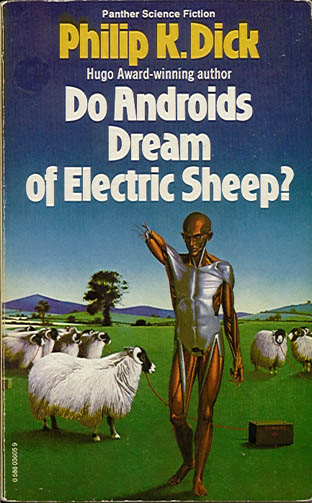
Do Anroids Dream of Electric Sheep?


This book is the basis of the movie Blade Runner. While there are obvious plot connections, the book has a completely different feel. The plot obeys one of Aristotle's classical unities: the unity of time.

The book introduces a machine that controls and creates emotions, even complex emotions like the pleased recognition of the husband's wisdom. Deckhard's wife struggles with the use of the machine, refusing it to use it or selecting a setting that causes deep depression and guilt. Like her husband, she is searching for what is real, true and human but forced to rely on the artifical, the machine for the catharsis she needs, the human connection she craves.

Empathy is the primary way to distinguish androids and humans. In the movie, there is a definite confusion between empathy and sympathy. Both indicate an ability to understand what another person feels and be able to feel what they are feeling. Sympathy is a step further; it includes compassion and ongoing concern for another person. In the book, the newest androids can empathize with humans, are capable of feeling what another feels. On a superficial level, they are capable of identify and emulate feelings. However, Rachael reveals that this ability to empathize is not inherently a positive characteristic. Understanding Deckhard's love and pride in his goat, she murders the goat in revenge. In the movie, Roy exhibits sympathy, compassion, when he elects to save Deckhard while he himself is dying.

The book also features a religious element which is absent in the movie. Mercerism is a religion that allows its members the ability to experience the founders struggles and martyrdom. The followers are linked through empathy boxes. Through these boxes, a follower enters the journey of Mercer, seeing and feeling what he saw and felt. They are also connected to the thoughts and feelings of everyone else who is presently using their empathy box.

Mercerism is threatened by Buster Friendly. Buster encourages consumerism and vapid feelings of content. Buster is the only television show on Earth and maintains a monopoly on entertainment. Mercerism is its only rival. Buster may be a frequently replaced android since he seems to never age or sleep. The androids that are staying with JR state this after Buster "reveals" Mercerism to be a fake.

Deckhard reflects that this supposed revelation will not fundamentally change people and their practices because the religion offers more than its foundation story. For many people, it offers their only connection to others, the ability to feel and communicate with them.

Deckhard himself experiences a religious vision after Mercerism is exposed. Throughout the novel, Deckhard experiences doubt about the ethics of his job and increasing empathy for the androids he retires. His relationship with his fake sheep continues to bother him. He feels that it is necessary for him to maintain his sheep, pretend that it is real, for the sake of appearances. But he resents the sheep, its mechanical demands, the constant care it requires while being artificial. His need to pretend that his sheep is real, to treat it as if it were, flies in the face of his profession as an android killer.

Deckhard's revelation is of Mercer telling him that he must compromise his ethics in order to do what is right, to kill the killers. After killing the last android, Deckhard travels out to a desert and climbs up a hill, mimicking Mercer's Sisyphean journey in the empathy boxes. Before reaching the top, he returns down the hill to his car. Unable to decide what to do next, Deckhard spots a frog, believed to be extinct. The frog was considered special to Mercer; Deckhard interprets this to be a blessing. Deckhard returns home to find his real goat murdered; his wife discovers that the frog is actually a fake. Deckhard is upset but glad to know the truth. Despite the frog being artificial, Deckhard wants to keep the frog and care for it.

Oh, such a delicious ambiguity! He despises his fake sheep, takes pride in his real goat, and decides to love and care for a fake frog. Despite his growing empathy for androids, he retires the renegades with precision. Deckhard desperately wants what is real but relies upon the artificial. The fake human is to be killed, the fake animal to be provided for, cared for, petted. The religion is proven false but potent, much like Deckhard's frog, much like the new androids.

Friday, July 23, 2010

Sci-Fi Sick Day

I've been sick for a couple of days now. I can never figure out if it is better to just get sick, get over, and acquire a new immunity or to become a germaphobe, keeping a steady stream of purell and deplete my immune system. Anyhow, since I am sick, I let myself be lazy today, with intermittent fever.

Before my nap, I read a few chapters of Do Androids Dream of Electric Sheep? I watched the 1984 Dune movie. I was impressed but I want to digest it before I write about it. Following that was 1.5 episodes of Star Trek: The Next Generation, Dr. Who, Top Gear and wrapped up the night with Alex telling me about the advances in science in the recent issue of the Economist. Altogether a good day for science and science fiction.

The full Star Trek episode was Conundrum. All members of the Enterprise have their memories wiped clean and become pure subconscious. I was extremely alarmed by the supposed first office MacDuff, who I could not remember for the life of me. He was an alien who had infiltrated the starship to win a personal war - what a relief! I found it pleasing to watch Lt. Commander Worf being captain and later watching Piccard's ethics overcome his fear.

Dr. Who remains a mystery for me. It just does not grip me. There is all this magic, these messes that are never cleaned up. It is a lot like Quantum Leap (or I suppose it is really the other way around) but it is less tidy and full of things that could not happen. To be specific, I watched the episode with the intelligent, mobile plastic. I assume it was the start of a series since the doctor picked up a new chic to play with, unless he does this every episode. If I were to classify Dr. Who within a sub-genre, I would stick it in limp sci-fi. It is sci-fi the way an illusionist is a magician. What we call magicians now a day is actually an illusionist, someone who pretends to be a magician. You can only call him a magician if you really think he pulls a rabbit out of thin air. Hint: he doesn't. And the chemical structure of plastics can neither think nor bend through volition. Can I have just a tiny bit of believability? I'll grant the altruistic alien super hero with a special phone box, but an intelligent plastic? Come on.

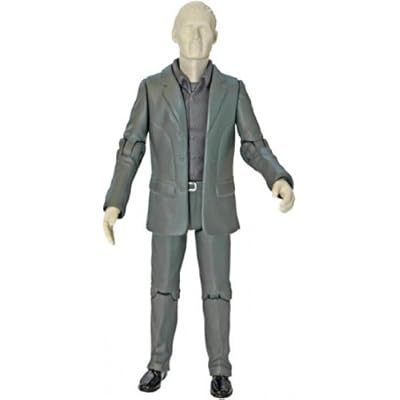
Geez, I just found out you can actually buy little action figures from just about any episode. So you can buy these clever little plastic figures and play out your own bizarre bad-science stories where everyone in the universe has north English accents? Or did I misunderstand and these are collectors items? Which is worse?

Thursday, July 22, 2010

Star Trek (2009 Film)


I have heard from plenty of people that they love this movie and that it is the best Star Trek film. I just cannot agree. I thought it was terrible.

I know this is a little uber-geek but I was put off immediately when I realized that James Kirk was not being born in Iowa and that his father died. I have accepted the parallel universe plot device but who is Jim Kirk without being in is father's shadow? If there was any chance that I would like the movie, it was blown to pieces when young Kirk steals a classic car, answers his Nokia phone, blasts the Beastie Boys, is defiant and rude to his guardian, and then throws the car over a cliff. What? So Kirk is a punk, there is still petrol and in 2233 we are still listening to the Beastie Boys?

A lot of people also said that they loved the new Kirk. The thing is that I love Shatner. I loved him as captain Kirk when I was little, still do, and I love the person he is now. I know that Kirk has a reputation for being a lady's man but he consistantly refused romantic entanglements because he put the needs of his crew before his own needs and desires. There was always a tragic element with him, a heroic loneliness. He was also a wise and intelligent man. His refusals to obey Starfleet rules were always in the best interest of those at risk, not just his own petulant flaunting of his ego.

I also liked the emotional depth and ethical dilemma that were mainstays of the show. This movie offered no challenge to modern society. The original frequently battled sexism, racism, class hierarchies, politics, economics, warfare, torture, etc. There were just cheap ploys of baddies and goodies, no attempt to fix destruction of the Romulan homeland, and explosions. The new movie was just a bunch of smart-ass brats instead of mature, responsible and compromised adults.

I didn't buy Spock's classic struggle of Vulcan vs human. I felt like McCoy was absurdly stereotyped. And well, I just plane hate Scotty. Harold is just no match for Tekai as Sulu.

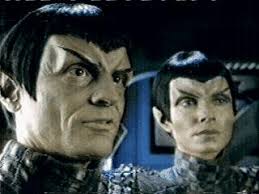
For a trekkie, it was funny that Kirk didn't know Uhura's name (she didn't have a first name in the original series). I enjoyed the inclusion of Capt. Pike. I found the women's uniforms tragically outdated and insulting. Why didn't the Romulans look like Romulans anyway?


vs


Did Roberto Orci and Alex Kurtzman ever watch the show? Any of them? I guess I really shouldn't expect much from the people who wrote the Transformers movie. I beg you "writers", please stop destroying my childhood.

For those of you who like the original series, the original Captain Kirk, or just love the Shatner, here is some gratuitous classic Kirk.

Wednesday, July 21, 2010

A Word About Genre: Mundane Sci-Fi

What a wonderful aberration of science fiction that I have just discovered! It is sci-fi based on this planet with only the technology we have, without the fantasy of speed-of-light travel or parallel universes. I find it strange how excited I am by Sci-Fi that completely lacks fantasy, but I am. If you wanted to map this on the hard/soft sci-fi continuum, it would be all the way over to the hard side with accurate science, although that does not preclude the possibility of soft science themes.

Is this even sci-fi? I am not sure. Fantasy seems to be such an intrinsic part of the genre. But if this is fiction about or heavily influenced by science or fiction about where current technology can take us, then it must be sci-fi, right? The Cold War inspired numerous sci-fi stories of possible impending doom as nations play a deadly game of one-ups with weapons. Those were certainly science-fiction.

I suppose The Twilight Zone has a few examples. There was an episode called 'Where Is Everybody?' in which a man finds himself in an uninhabited town except there is lingering evidence of someone having just been present (i.e. a lit cigarette in an ashtray). It turns out that this is a dream or hallucination caused by prolonged sensory deprivation. A little wiki-sluething has revealed that this was the first episode of the series! Facts are fun.

This seems to have riled up quite a large section of the sci-fi world but I am intrigued by the possibilities it offers in literature.

Since I have not read any mundane sci-fi, at least not knowingly, I cannot offer my own opinions, analysis or even a reading list. Instead I offer you a link to this blog about Mundane Sci-Fi.